
The dashboard warning lights in the Nissan Rogue are designed to monitor vehicle systems and alert the driver when maintenance, system intervention, or immediate repairs may be required. These indicators help improve safety, protect vehicle components, and provide real-time information about the operating condition of the vehicle.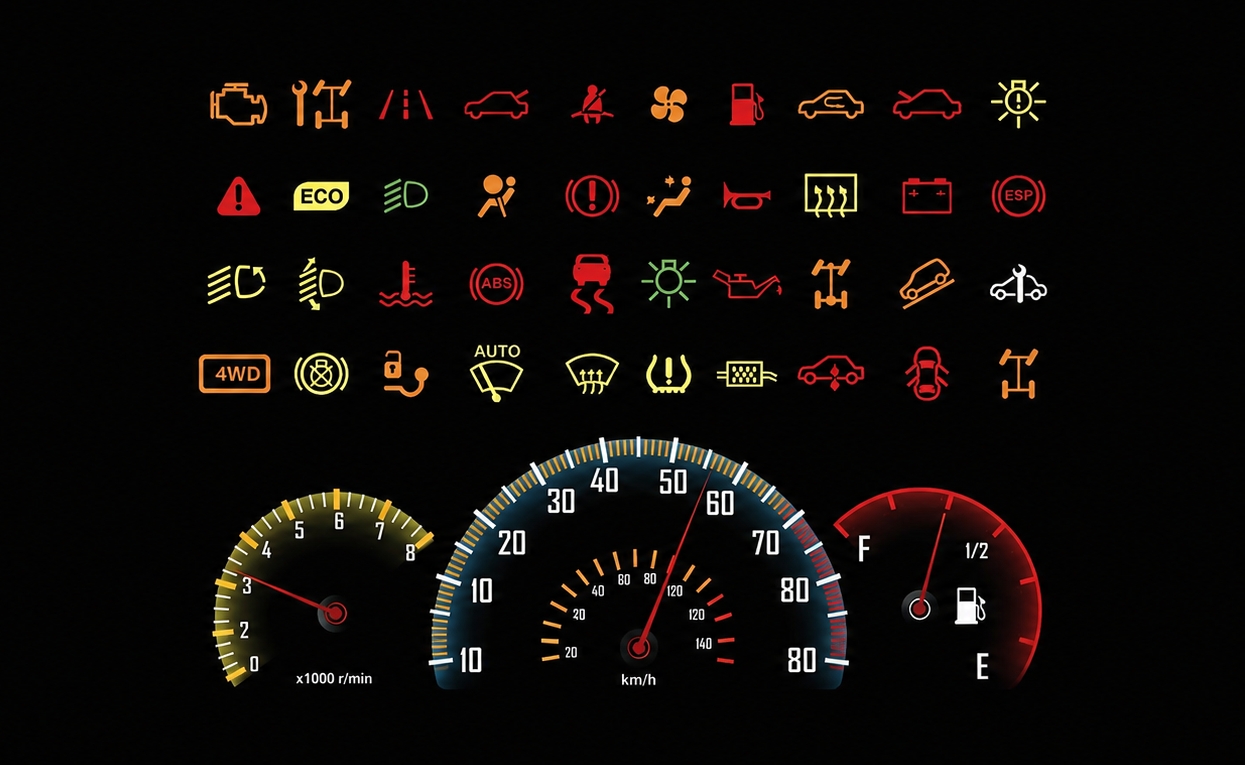
Check Engine Light (MIL) – This light indicates that the engine management system has detected a fault related to the engine, fuel system, ignition system, emissions control system, or sensors. Diagnostic scanning is recommended to identify the specific trouble code and determine the cause.
Oil Pressure Warning Light – This warning appears when engine oil pressure falls below the safe operating range. Low oil pressure can cause severe engine damage if the vehicle continues to operate. The engine should be stopped immediately and the oil level checked.
Battery Charging Warning Light – This indicator signals a problem within the charging system, such as a failing alternator, damaged wiring, slipping drive belt, or weak battery. If ignored, the battery may discharge completely and prevent the vehicle from starting.
Brake Warning Light – This light may illuminate when the parking brake is engaged, brake fluid is low, or a fault exists within the braking system. The vehicle should be inspected promptly to ensure safe braking performance.
ABS Warning Light – The Anti-lock Braking System warning light indicates that the ABS has detected a malfunction. Normal braking may still function, but the anti-lock feature designed to prevent wheel lockup during hard braking may be disabled.
Traction Control Light (TCS/VDC) – This indicator flashes when the traction control system is actively reducing wheel spin on slippery surfaces. If the light remains on continuously, the traction control or stability control system may require diagnosis.
Tire Pressure Monitoring System (TPMS) Light – This warning alerts the driver when one or more tires are underinflated. Proper tire pressure improves safety, fuel efficiency, tire life, and vehicle handling.
Engine Temperature Warning Light – This light indicates that the engine coolant temperature is excessively high. Common causes include coolant leaks, a faulty thermostat, radiator blockage, cooling fan failure, or low coolant level.
Airbag Warning Light (SRS) – The Supplemental Restraint System warning light signals a fault in the airbag or seatbelt pretensioner system. The airbags may not deploy correctly during a collision if this light remains illuminated.
Low Fuel Warning Light – This indicator reminds the driver that the fuel level is approaching empty and refueling should be performed soon to avoid fuel starvation.
Lane Departure Warning Light – Equipped on many newer Nissan Rogue models, this system monitors lane markings and warns the driver when the vehicle unintentionally drifts out of its lane without signaling.
Forward Collision Warning / Automatic Emergency Braking Light – This indicator relates to the advanced driver assistance system that monitors traffic ahead and may provide warnings or automatic braking to help reduce collision risks.
AWD Warning Light – On all-wheel-drive models, this light indicates a malfunction in the AWD system, overheating of AWD components, or abnormal drivetrain operation requiring inspection.
Master Warning Light – Usually displayed as a yellow triangle with an exclamation mark, this general warning indicator informs the driver that one or more vehicle systems require attention. Additional messages on the instrument display provide more detailed information.
Importance of Dashboard Warning Lights
Dashboard warning lights serve as an early detection system for potential vehicle problems. Green or blue lights generally indicate normal system operation, yellow or amber lights usually signal a condition requiring attention, and red warning lights often indicate a serious issue that requires immediate action. Understanding these indicators helps Nissan Rogue owners maintain vehicle reliability, improve safety, and avoid costly repairs caused by delayed maintenance.