The traction control warning light is part of the vehicle’s Traction Control System, often called TCS. Its main purpose is to help prevent the drive wheels from spinning when accelerating on slippery roads, such as wet pavement, snow, ice, gravel, or loose dirt. The system uses wheel-speed sensors to monitor how fast each wheel is rotating. If the computer detects that one or more drive wheels are spinning faster than the others, it can reduce engine power or apply braking force to the slipping wheel. This helps the tires regain traction and improves vehicle stability and control. If the traction control light flashes briefly while you are driving, it usually means the system is actively working. For example, it may flash when you accelerate quickly on a wet road, drive over snow or ice, or experience temporary wheel slip. In most cases, occasional flashing is normal. Reduce your speed, accelerate more gently, and avoid sudden steering or braking until road conditions improve. However, if the light flashes constantly even on a dry, straight road, there may be a problem with a wheel-speed sensor, ABS system, wiring, steering-angle sensor, or another stability-control component. If the traction control warning light stays on continuously, the traction control system may be disabled or have a malfunction. Common causes include: Traction control has been manually switched off. A wheel-speed sensor is dirty, damaged, or defective. An ABS sensor or ABS control system has a fault. Damaged sensor wiring or electrical connections. Different tire sizes or significantly different tire pressures. Steering-angle sensor malfunction. Traction control or stability control module fault. Low battery voltage or charging-system problems. An engine or transmission fault that causes the stability system to disable traction control. In many vehicles, the ABS light, stability-control light, or check engine light may also come on at the same time. First, check whether you accidentally pressed the TCS, ESC, ESP, or traction-control OFF button. Turn the system back on and restart the vehicle. Next, check all four tires. Make sure the tire pressures are correct and that the tires are the proper size. A major difference in tire diameter can cause incorrect wheel-speed readings. If the warning light remains on, scan the vehicle for diagnostic trouble codes. A basic engine-code scanner may not be enough because traction control faults are often stored in the ABS or stability-control module. An ABS-capable diagnostic scanner is recommended. The wheel-speed sensors and their wiring should also be inspected. Dirt, corrosion, damaged wiring, damaged wheel bearings, or defective sensor rings can cause incorrect wheel-speed signals. If the traction control light appears together with the ABS warning light, have the ABS system inspected as soon as possible. The vehicle can usually still be driven if the traction control light is on and the brakes, steering, and engine are operating normally. However, traction control may not be available. This means the wheels may spin more easily when accelerating, especially on wet, snowy, or icy roads. Drive more slowly and avoid aggressive acceleration. If the traction control light appears together with a red brake warning light, serious braking problems, loss of engine power, abnormal steering, or multiple warning lights, the vehicle should be inspected immediately. Flashing light: Traction control is usually working because wheel slip has been detected. Light stays on: Traction control may be switched off or the system may have a fault. Stays on with ABS light: Possible wheel-speed sensor, ABS, wiring, or control-module problem. Best repair method: Check the traction-control switch and tires first, then scan the ABS/TCS system for fault codes and inspect the wheel-speed sensors.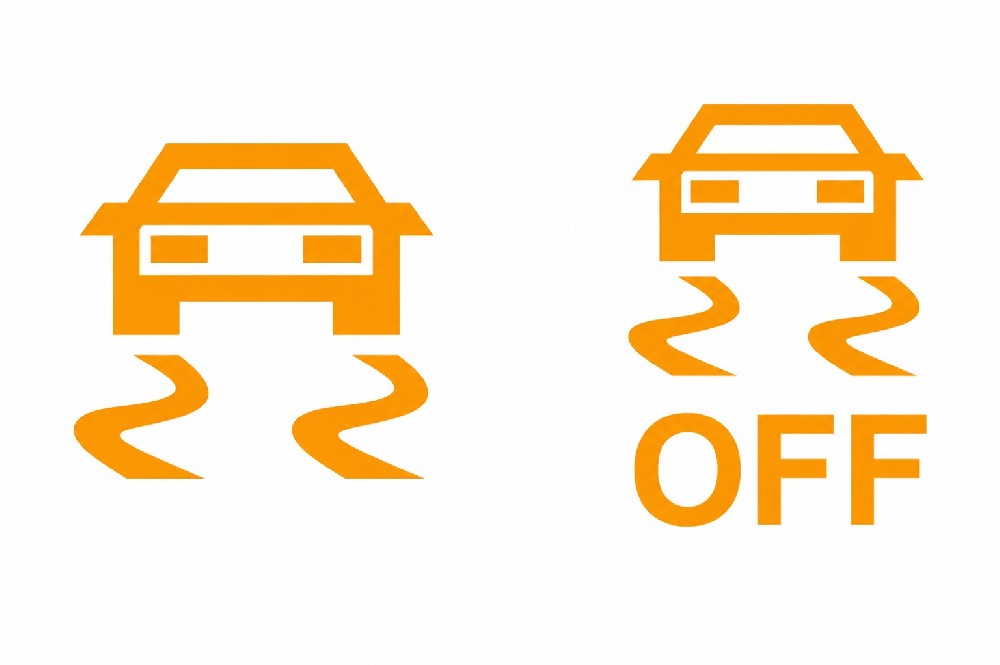
What Does a Flashing Traction Control Light Mean?
What Does a Traction Control Light That Stays On Mean?
What Should You Do?
Can You Drive With the Traction Control Light On?
Quick Meaning
Search